
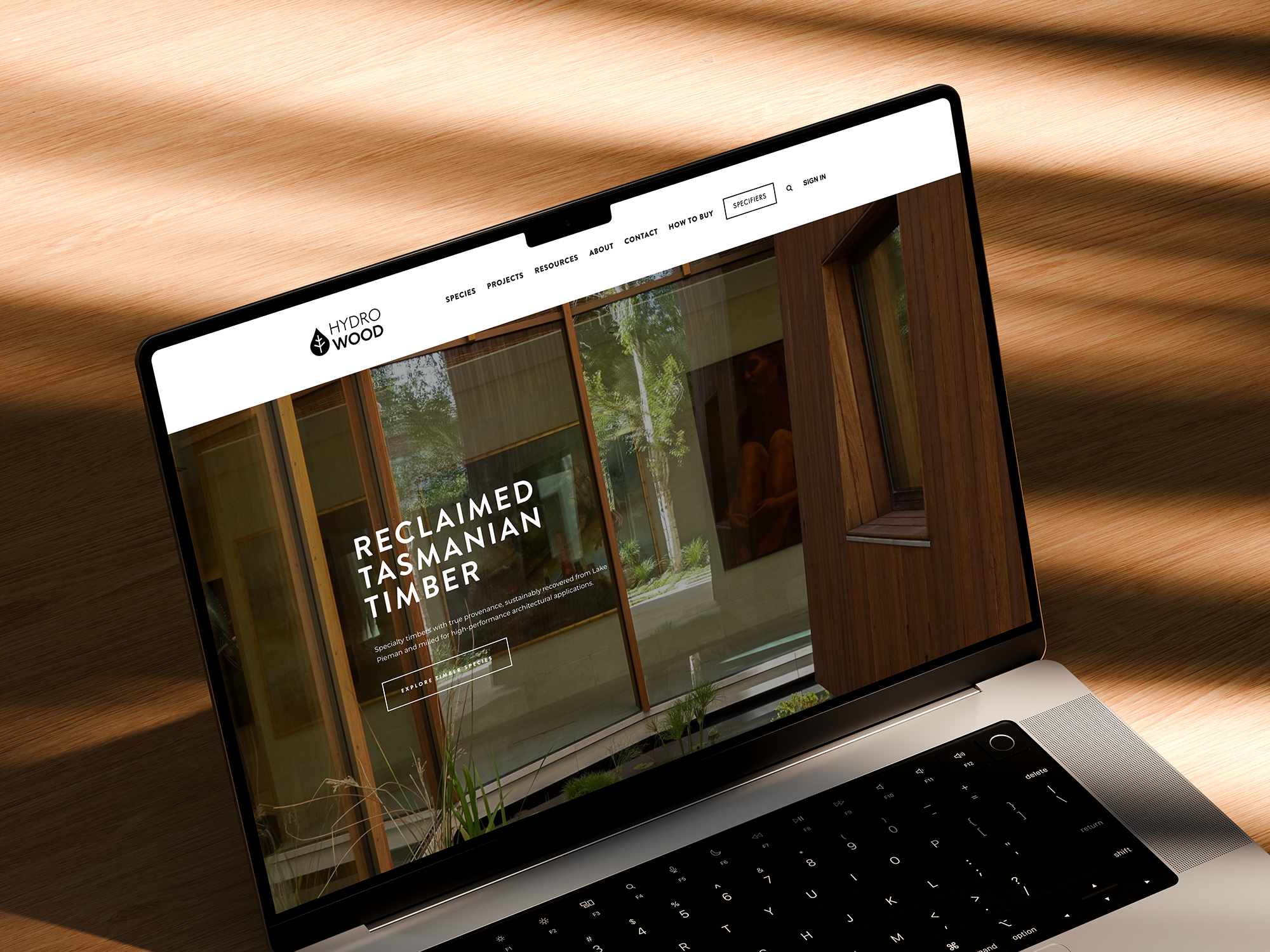
From Story to Specification:
Turning Hydrowood into a Commercially Driven Brand
Client: Hydrowood
Industry: Building Supplies
Location: Hobart, Tasmania
Team: Melissa Hampton, Patrick Gee, Emily Shin
Timeline: October 2025 – Present 2026
Scope of work: Website Audit, Website Redesign, Website Content Overhaul, Specifiers Portal Development, SEO Optimisation, Social Media Management, Content Creation & Sales Enablement
Hydrowood engaged Tuesday Creatives, in conjunction with brand consultant Michael Travalia, to support its transition from a story-led brand to a commercially focused product business.
Phase one included a website audit covering SEO, UI/UX and CRO, website redesign, website content overhaul and development of a specifier’s portal. Phase two included ongoing website optimisation, social media and content retainer spanning Instagram, LinkedIn, Facebook, EDM and blog content.
The key objectives were to increase visibility, clarify the product offering and align marketing with real-world purchasing pathways and distribution.
The result was a stronger, more consistent brand presence, a 70% increase in organic search impressions, improved keyword rankings, higher quality audience engagement and a clear uplift in enquiries and distributor-supported sales activity.
70%↑
Organic search impressions
18X
IG Content Interactions
4,000%↑
Facebook Link Clicks
The challenges:
Brand history & Growth challenges
Hydrowood had already built a powerful brand when they reached out to Tuesday Creatives, something many businesses struggle to achieve. Since 2015, it had become known as one of Australia’s most innovative producers of reclaimed timber, recovering rare native species from Tasmania’s hydro-electric lakes and transforming them into high-quality timber for homes, furniture and commercial spaces.
Over a decade, the brand captured attention through a compelling story, rich provenance and a product unlike anything else in the market. It was well known and respected, particularly within architectural and design circles.
As the business entered its next phase of growth, the role of marketing needed to evolve. The existing narrative had built intrigue and credibility, but remained centred on story rather than commercial clarity.
The opportunity was no longer just to be interesting, but to be specified, sourced and used at scale. This required a shift toward clear, confident communication around real products, supply pathways and national availability, supported by more consistent and visible marketing activity.
The challenge was to evolve Hydrowood’s presence without losing what made it distinctive, maintaining its premium positioning while making it clear the product was ready to be specified and delivered.
“2025 was a milestone year for Hydrowood ... building an outstanding team across timber processing, marine operations, marketing and sales – expertise that positions Hydrowood strongly for the future.” — Neale Tomlin, CEO
Website Challenges
Initially the requirements for the website project were to refresh the content to better reflect the brand growth and increase the information available to specifiers to gain more traction within the building industry. Upon further discovery, the Hydrowood team were experiencing a reduction in website sessions, low website conversion rates and lack of lead segmentation leading to missed sales opportunities.
Following a comprehensive website analysis, it was found that there was large opportunity to improve the overall website performance.
The analysis identified the following performance issues:
Poor technical health
Information architecture (IA) problems
Missed keyword opportunities
UI/UX issues
Conversion pathway issues
A duplicate website weakening authority and causing user confusion
Social media challenges
Hydrowood’s social presence reflected the strength of its brand. Visually strong, story-led and grounded in provenance, it reinforced what made the product unique.
However, it lacked consistency and messaging around commercial use and availability.
Content leant heavily toward narrative, with limited clarity around the product, applications or how Hydrowood could be specified and sourced. Posting was also inconsistent, making it difficult to build sustained visibility and audience growth.
The audience was sizeable and included some of the right people, but was largely built through PR-driven interest in the story. Many followers were drawn to the intrigue and origin of Hydrowood, rather than being potential customers.
While attention was strong, intent was mixed.
The challenge was to evolve social into a more balanced channel, maintaining its premium appeal while introducing consistency, attracting a more commercially relevant audience and guiding that audience toward enquiry and conversion.
Brand Objectives
Working in close collaboration with the Hydrowood team and brand consultant Michael Travalia, marketing objectives were established early and included:
Shift brand perception from ‘interesting story’ to ‘specifiable product’
Increase qualified sales enquiries
Support distributor pathways
Build authority with Australian architects, designers and builders
Grow the right audience, not just reach
strategic shift
The key strategic marketing initiatives included:
Repositioning narrative: from provenance to product + performance
Maintaining premium, architectural positioning
Balancing story, reclaimed timber and commercial clarity
Aligning marketing channels and conversion pathways
Customer journey mapping
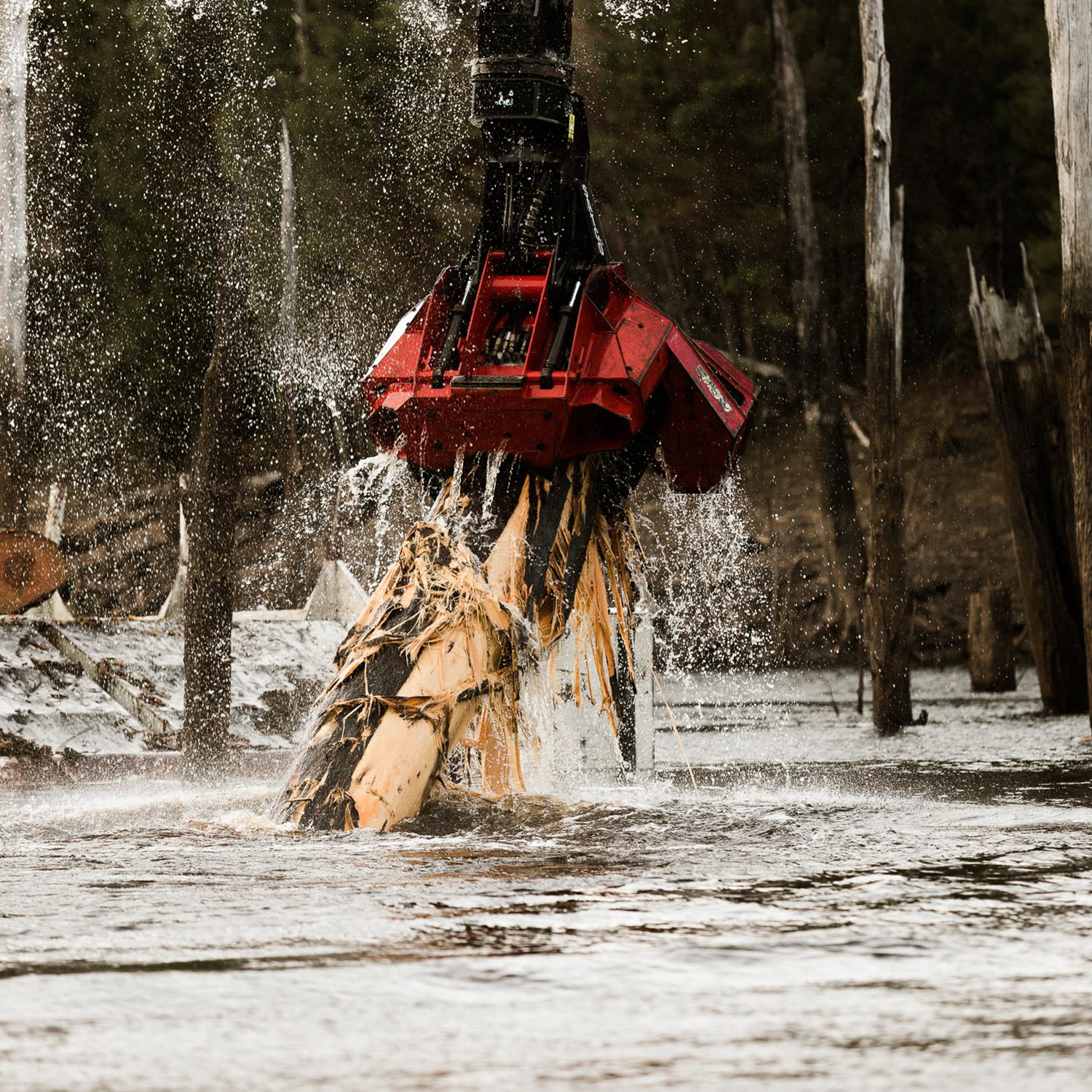
Implementation
Phase 1: Website Audit, Website Content Overhaul, Website Redesign & Specifiers Portal Development
The first step in phase one was a full website audit, this included:
Traffic and engagement analysis
Technical analysis
Keyword analysis
Off-page analysis
UX analysis
Competitor and category gap analysis
The second step in phase one was developing a new sitemap, customer journey mapping, implementing technical fixes, rewriting core pages to prioritise clarity and outcomes, redesigning the website, producing clear “how to buy” pathways, developing a specifiers portal with gated content, implementing stronger product and application messaging and structuring content for specifiers and decision-makers.
Phase 2: Ongoing Website Optimisation, Social Media & Content Management
Following the website redesign, it was time to move onto the longer-term strategy and plan to generate growth. Through keyword research, high-intent search opportunities were identified, and a long term plan was implemented to target these queries. Monthly landing page and blog additions were incorporated to meet intent. Internal linking and site architecture improvements were slowly rolled out to build authority and further strengthen organic visibility.
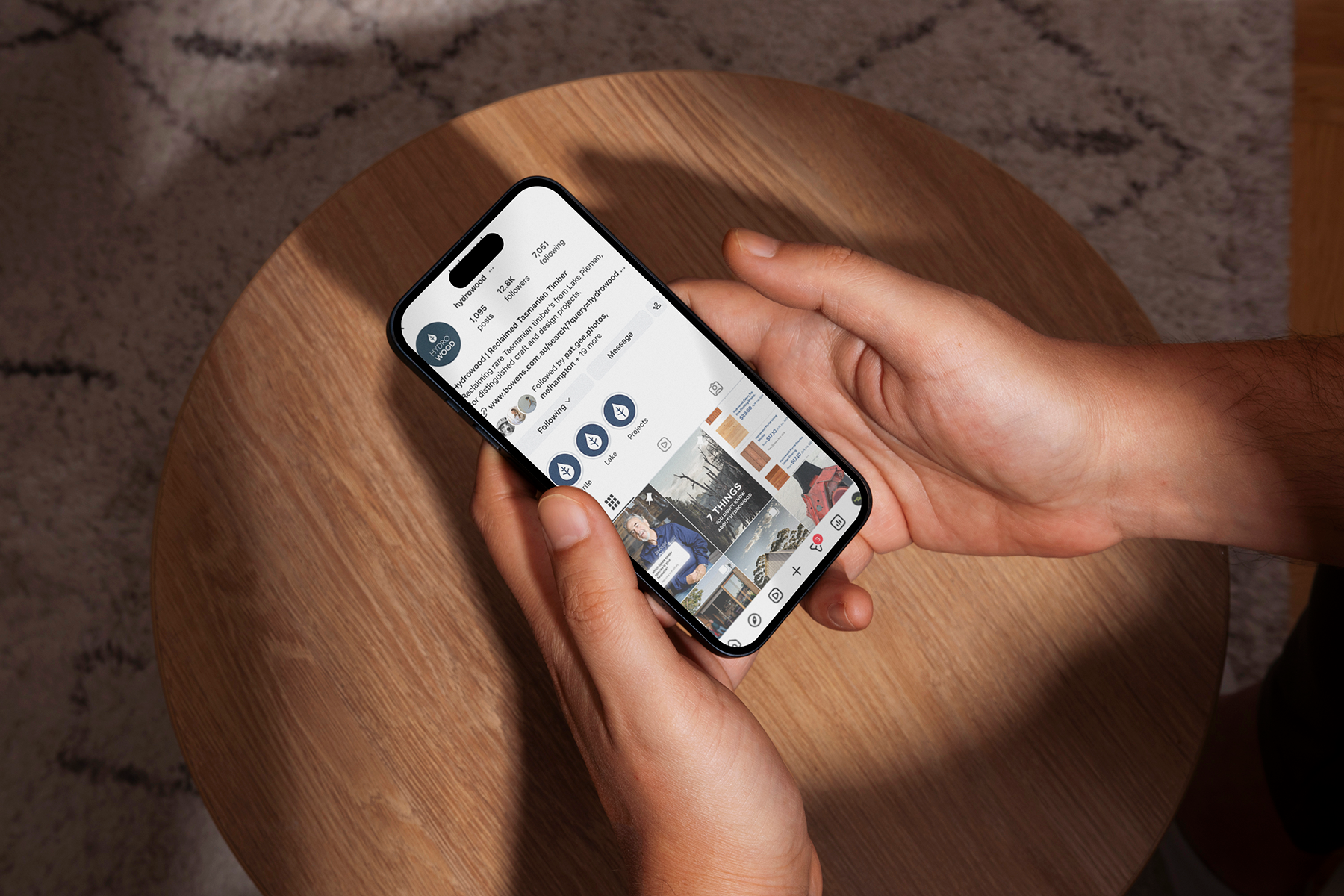
Following strategic planning workshops with Michael Travalia and Hydrowood’s leadership team, a detailed social media and content strategy was developed to support the business’s next phase of growth.
This established clear messaging themes, content pillars and channel priorities across Instagram, LinkedIn, Facebook, EDM and blog content. The focus was on creating a more structured, consistent and commercially aligned content system.
A key shift was increasing consistency and visibility ensuring the brand showed up regularly and maintained momentum with its audience.
Execution centred on a defined mix of content types, each with a clear role:
Product and range highlights to communicate what is available
Application and project content showing real-world use and inspiration
Specification-focused posts to support architects and designers
Educational content to build understanding and confidence
Story-led content to retain brand depth and differentiation
Content was planned and delivered with intent, with each piece designed to build awareness, support consideration or assist conversion.
Distribution, sales and audience strategy
A key priority was strengthening the connection between marketing and distribution, while shifting the audience toward quality and relevance over scale.
Content and messaging were aligned with real-world buying journeys, making it easier for architects, designers, builders and specifiers to understand not just the product, but how to access it through distributors.
This approach refined both targeting and content to focus on commercially relevant audiences, supported by collaboration with distributors, showrooms and architects to extend reach and credibility.
The result was a clearer pathway from awareness to specification and purchase, supported by practical sales tools, stronger on-the-ground conversations and a more valuable, engaged audience.
Results & Impact
Project Outcome
The shift in strategy delivered measurable improvements across visibility, engagement and commercial performance.
Interest levels increased as clearer messaging, stronger content and defined pathways made it easier for customers to move from interest to action.
Website performance also improved significantly. Organic search impressions increased by more than 70%, with Hydrowood ranking for a broader range of keywords and achieving more top three positions. Hydrowood has since experienced an 139% increase in leads generated. This growth reflects stronger alignment between strategy, content, organic search and product-led messaging.
“tuesday creatives’ service offer, insight and dedication is to be applauded.”
- Michael travalia - Brand Consultant
SEO Performance Highlights


+70%↑ in organic search impressions
Top 3 ranking:
+128%


Organic traffic doubled: +100%
Page 1 rankings (positions 4-10) : +187%
Across social media, performance improved in both volume and quality. Reach, engagement and profile visits increased, while the audience became more commercially relevant.
Email marketing results reinforced this shift, with strong delivery rates, a 44% average open rate and click-through rates of 6%, pointing to a highly engaged audience.
Importantly, these outcomes extended beyond marketing metrics, supporting distributor activity and sales conversations, and helping translate brand interest into real-world product movement.
Key Insights
Clear product messaging, availability and purchasing pathways are essential to convert brand awareness into action
Story-led marketing must be balanced with product and application clarity across all relevant channels
Consistency builds visibility and momentum, while audience quality matters more than size in many markets
Aligning marketing with distribution and sales channels improves conversion and supports the entire buyer journey